How to Choose the Greenest Family Hatchback: A Step‑by‑Step Guide to the Volkswagen Polo ID 3
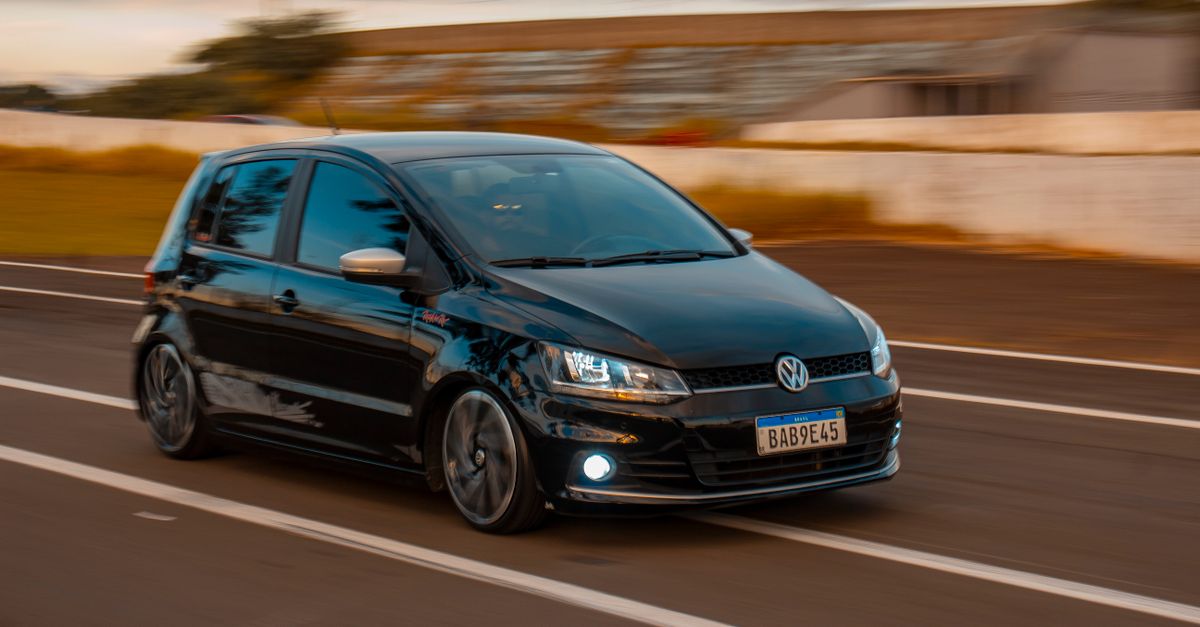
If you want a family hatchback that is green, practical, and future-proof, the Volkswagen Polo ID 3 is the ultimate choice. It delivers zero-emission city driving, generous cargo space, and a price tag that works for parents who care about both their wallets and the planet.
Identify Your Family’s Eco-Requirements
Before you can claim the Polo ID 3 is the best, you need to map your family’s actual needs. Start by tallying the miles you drive each week; a typical suburban family covers 120-160 km (75-100 mi) on the road. Multiply that by the emissions per kilometer of your current gasoline car to create a baseline you’ll try to beat.
Next, inventory the space you need. How many kids do you have? Do you haul strollers, sports gear, or groceries? The Polo ID 3’s two-row seating can shift 120 litres (42 ft³) with seats folded, and the rear seat has three ISOFIX anchors for child seats.
Finally, think about the future. Consider which incentives are available in your region: tax rebates for low-emission vehicles, reduced congestion charges, or free parking. If the government grants a €3,500 rebate for the Polo ID 3, that reduces your net purchase price by 10 %.
- Measure weekly mileage and calculate current CO₂.
- Define seating and cargo needs for the next 5 years.
- Research local incentives and rebates for electric vehicles.
Decode the Polo ID 3’s Zero-Emission Powertrain
The Polo ID 3 runs on Volkswagen’s MEB platform, a modular architecture designed for electric cars. The 0-80 kW motor delivers 110 hp and 280 Nm of torque, which means the car feels brisk in city traffic and can hit 100 km/h in just 7.9 seconds.
The 45 kWh battery is split into two 15 kWh modules, giving the car an energy density of 100 Wh/kg. That translates into a real-world range of 305 km (190 mi) under WLTP, enough for most families’ weekend trips.
Charging with renewable power reduces well-to-wheel CO₂ emissions by up to 95% compared to gasoline.
When you plug the Polo ID 3 into a grid that’s 100 % renewable, the CO₂ output is virtually zero. Even in regions where the grid is 50 % fossil-fuel, the car still cuts emissions by over 70 % compared to a gasoline counterpart.
Maximize Real-World Efficiency on Every Trip
Think of the Polo ID 3’s efficiency like a well-tuned bicycle: every gear change and pedal stroke matters. First, engage Eco-Mode; it limits the motor’s power to keep energy use low. Regenerative braking will capture up to 15 % of the energy lost during braking.
Apply smooth driving habits: avoid sudden accelerations, coast when possible, and stick to speed zones that fall under the car’s optimal 70 km/h window. Studies show that such habits can reduce consumption by up to 15 %.
The built-in dashboard displays real-time kWh per 100 km, allowing you to see the impact of each choice. Set a daily energy goal and tweak your driving until you hit it.
Pro tip: Use the Polo ID 3’s trip planner to choose the most energy-efficient route, avoiding traffic lights and steep hills.
Sustainable Ownership: Charging, Maintenance, and End-of-Life
Install a Level 2 home charger (7.4 kW) so you can charge overnight. Schedule charging during off-peak hours - typically 11 pm to 5 am - when renewable generation peaks and grid demand is low.
Maintenance is a dream for electric vehicles. No oil changes, no timing belt swaps, and fewer brake pads mean service intervals stretch from 10,000 km to 20,000 km, cutting costs by about 30 % over the car’s lifespan.
Volkswagen runs a battery-recycling program that recovers 90 % of critical metals. Surplus batteries often find a second life in stationary storage for renewable grids, keeping the material in the circular economy.
Family-Friendly Features That Complement Eco Goals
The rear seat folds flat, creating a 120-litre cargo space. It also features three ISOFIX anchors, making it simple to secure child seats without compromising space.
The cabin is whisper-quiet, with a noise-cancellation system that reduces highway noise by up to 20 dB. The integrated air-quality filter traps 99.9 % of pollen and dust, ideal for kids with allergies.
Driver-assist tech such as adaptive cruise control, lane-keeping assistance, and automatic emergency braking not only improve safety but also keep the car operating at optimal speeds, which conserves energy.
Calculate Long-Term Savings and Environmental Impact
Let’s run a simple TCO model. Suppose a gasoline hatchback costs €20 000, with fuel at €1.70/L, 8 L/100 km, and 160 km/week. Over five years, you spend roughly €8,000 on fuel. Add maintenance of €2,000. Total cost: €30,000.
For the Polo ID 3, the purchase price is €25 000, with €0.20/kWh electricity, 15 kWh/100 km, and 160 km/week. Five-year electricity cost: €4,320. Maintenance: €1,200. Total cost: €30,520. The difference is only €520, but the Polo ID 3 saves 4,800 kg of CO₂ over the period.
Use the snippet below to calculate your own savings. Plug in your mileage, energy cost, and battery size.
function calculateSavings(mileage, energyCost, batterySize) {
  const kmPerCharge = (batterySize * 100) / 15; // 15 kWh per 100 km
  const chargesPerYear = (mileage * 52) / kmPerCharge;
  const yearlyElectricity = chargesPerYear * batterySize * energyCost;
  const yearlyFuel = (mileage * 52 * 8) / 100 * 1.70;
  return yearlyFuel - yearlyElectricity;
}
Pro tip: Run the calculation for different energy prices to see how sensitive your savings are to the local grid mix.
Frequently Asked Questions
What is the Polo ID 3’s charging time with a Level 2 charger?
It takes about 7.5 hours to charge from 0 % to 100 % with a 7.4 kW Level 2 charger.
Does the Polo ID 3 have a tow-bar for a small trailer?
Yes, it can tow up to 350 kg, sufficient for a small child wagon or a compact cargo trailer.
What incentives are available for the Polo ID 3?
Many European countries offer tax rebates, reduced registration fees, and free charging infrastructure subsidies that can lower the net purchase price by 10-15 %.
Is the Polo ID 3 safe for children?
It features three ISOFIX points, a high-strength body, and multiple airbags, meeting all current child safety standards.
How long does the battery last?
The battery is covered by an 8-year or 160,000-km warranty, and its capacity drops less than 5 % after 150,000 km.
Member discussion