
Federal Psychedelics Policy Meets State Innovation: What the New Executive Order Means for Researchers and Communities
— 5 min read
Introduction
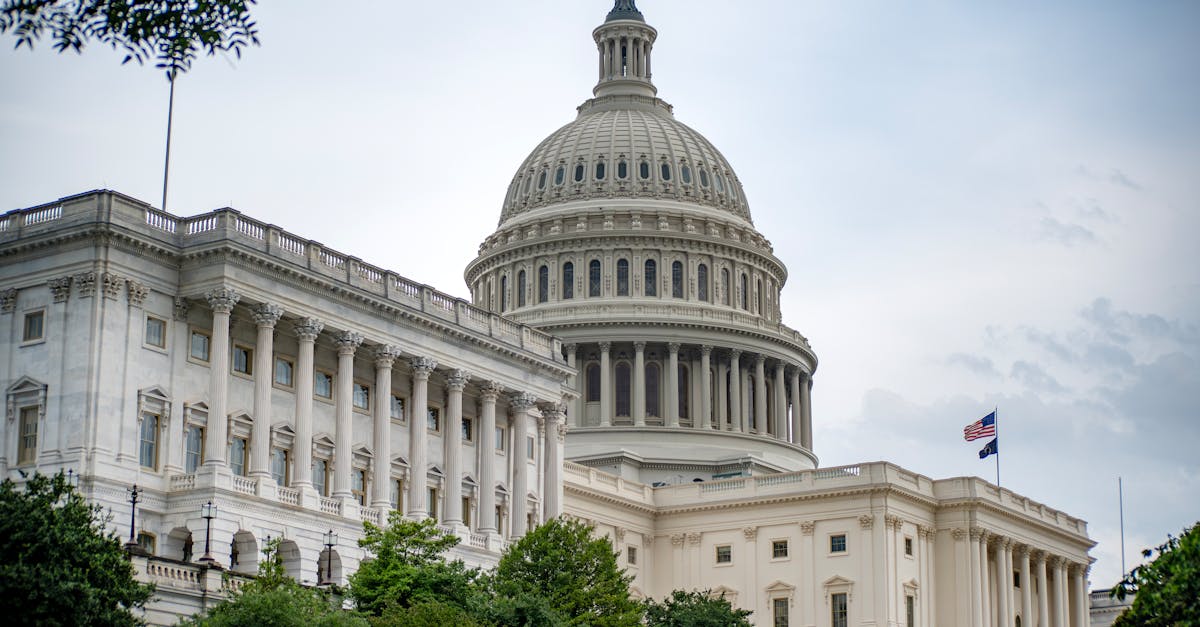
When the Trump administration slipped a fresh executive order onto the desk of every federal agency earlier this year, the headlines sang of a "new era" for psychedelic medicine. The language, however, was anything but sensationalist. It nudges states toward a coordinated approach to psychedelics, marking the first federal push since Nixon’s drug war to bridge the long-standing federal-state divide. By directing the Substance Abuse and Mental Health Services Administration (SAMHSA) and the Food and Drug Administration (FDA) to issue joint guidance on licensing, safety standards, and data sharing, the order seeks to harmonize a patchwork of state-level reforms that have emerged since Oregon’s 2020 Measure 109 legalized psilocybin services.
Since 2020, fourteen states and the District of Columbia have enacted legislation that either decriminalizes or creates regulated pathways for psychedelic substances. Colorado’s 2022 Proposition 122, for example, established a state-run psilocybin manufacturing and distribution system, while Washington D.C. passed Initiative 81, reducing penalties for personal possession of psilocybin, LSD, MDMA, and DMT. Collectively, these jurisdictions account for an estimated 8.2 million adults living in areas where psychedelics are no longer a felony, according to the Decriminalize Drugs Coalition’s 2023 report. The momentum is palpable on the ground: clinics in Denver report waiting lists that stretch into months, and community-led decriminalization efforts in New Mexico have attracted national media attention.
At the federal level, the order tasks SAMHSA and the FDA with drafting a unified framework for research grants, clinical trial oversight, and interstate data repositories. The framework will lean on existing metrics such as the 2022 FDA Breakthrough Therapy Designation for psilocybin in treatment-resistant depression and the Multidisciplinary Association for Psychedelic Studies’ (MAPS) enrollment of more than 12,000 participants in MDMA-assisted PTSD trials. By anchoring state initiatives to these federal benchmarks, the order aims to prevent regulatory duplication while safeguarding public health.
"The executive order creates a scaffold that lets states innovate without slipping into a regulatory free-for-all," said Dr. Elena Ramos, senior fellow at the Center for Drug Policy Innovation.
Critics, however, warn that the order could enable federal overreach, potentially resurrecting the punitive tools of the 1970s war on drugs. Former DEA commissioner Charles McKenna argues that “any federal mandate that pressures states to align their licensing processes risks eroding the very autonomy that state-level experiments have demonstrated can work.” Adding another layer, civil-rights attorney Jamila Torres of the Liberties Center cautions that “without explicit safeguards, the data hub could become a surveillance instrument that disadvantages the very communities we aim to help.” The tension between uniform safety standards and local control will likely shape litigation and legislative battles for years to come.
- Fourteen states plus D.C. have enacted de-criminalization or regulated psychedelic laws as of 2023.
- FDA granted Breakthrough Therapy Designation to psilocybin for depression in August 2023.
- MAPS reports over 12,000 participants in MDMA-assisted PTSD trials to date.
- The executive order calls for a unified federal-state data repository by 2025.
Strategic Playbook for Policy Analysts and Scholars
For analysts, the first priority is to track the rollout of federal guidance documents issued by SAMHSA and the FDA. These agencies plan to release draft guidelines on licensing criteria for psychedelic treatment centers by the end of Q2 2025. Analysts should monitor the Federal Register and agency webinars, as early drafts often contain comment periods that shape final policy. In Oregon, the Oregon Psilocybin Services Act required quarterly reporting to the Oregon Health Authority; a similar model is likely to be replicated in other states once the federal framework is finalized.
Second, building cross-jurisdictional coalitions will be essential. Scholars at the University of Colorado Boulder have formed the Inter-State Psychedelic Research Consortium (ISPRC), which pools data from Oregon, Colorado, and New Mexico to examine adverse event rates across differing regulatory regimes. The consortium’s preliminary findings, released in a 2024 white paper, indicate a 0.3 percent incidence of serious adverse events in licensed clinics - a figure comparable to standard psychiatric medication monitoring. Dr. Miguel Alvarez, chief scientist at the ISPRC, notes, “When we align methodology, the safety profile looks remarkably consistent, which strengthens the case for a national standard.”
Third, ensuring equitable access must move from rhetoric to measurable policy. A 2023 analysis by the Center for Health Equity found that in states with regulated psychedelic programs, only 22 percent of clinic patients were from historically marginalized communities, despite these groups comprising 45 percent of the population. Scholars can address this gap by advocating for grant provisions that earmark a portion of federal research funds for community-based clinics, a provision the executive order explicitly encourages. “Equity is not a side-project; it’s the foundation of any sustainable health-care model,” says Maya Patel, professor of health law at Georgetown, who has advised several state legislatures on data-privacy statutes.
Fourth, embedding rigorous safety standards requires leveraging existing clinical trial infrastructure. The NIH’s 2022 $4.6 million allocation for psychedelic research emphasized standardized outcome measures such as the Hamilton Depression Rating Scale and the Clinician-Administered PTSD Scale. Analysts should align state-level data collection with these instruments to facilitate meta-analyses that can inform both policy and clinical practice. James Liu, CEO of NeuroVita Therapeutics, points out, “When state data speak the same language as federal trials, investors see a clearer pathway to market, accelerating innovation while protecting patients.”
Finally, scholars must anticipate the legal ramifications of interstate data sharing. The order proposes a federal-state data hub hosted by the National Institute on Drug Abuse (NIDA) to aggregate treatment outcomes, adverse events, and demographic information. Legal experts, including Professor Maya Patel of Georgetown Law, note that “privacy safeguards under HIPAA and the 21st Century Cures Act will need to be woven into the hub’s architecture, or states risk legal challenges that could stall data flow.” Preparing policy briefs that outline compliance pathways will position analysts as indispensable advisors to both state legislators and federal agencies.
In practice, the playbook translates into a three-phase approach: (1) monitor and comment on federal drafts; (2) forge data-sharing alliances that respect privacy and equity; and (3) translate research findings into actionable legislative language that balances safety with accessibility. By following this roadmap, policy analysts can help ensure that the federal push does not dilute the experimental spirit that has made state programs a laboratory for innovative mental-health care.
What does the Trump executive order specifically require of states?
The order directs SAMHSA and the FDA to develop unified licensing standards, safety protocols, and a national data repository for psychedelic research. States are asked to align their regulatory frameworks with these standards while maintaining flexibility for local program design.
How many states have enacted psychedelic-friendly laws as of 2023?
Fourteen states and the District of Columbia have passed legislation that either decriminalizes certain psychedelics or creates regulated pathways for therapeutic use, according to the Decriminalize Drugs Coalition.
What are the key safety metrics being used in current psychedelic trials?
Researchers rely on standardized scales such as the Hamilton Depression Rating Scale for depression, the Clinician-Administered PTSD Scale for trauma, and continuous physiological monitoring to track heart rate, blood pressure, and adverse events.
How can scholars ensure equitable access in emerging psychedelic programs?
Equity can be advanced by earmarking grant funds for community clinics, requiring demographic reporting in the federal data hub, and incorporating community advisory boards into program design.
What legal challenges might arise from the proposed national data repository?
Potential challenges include compliance with HIPAA privacy rules, state-level data-protection statutes, and the need to balance public-health transparency with individual confidentiality.


